
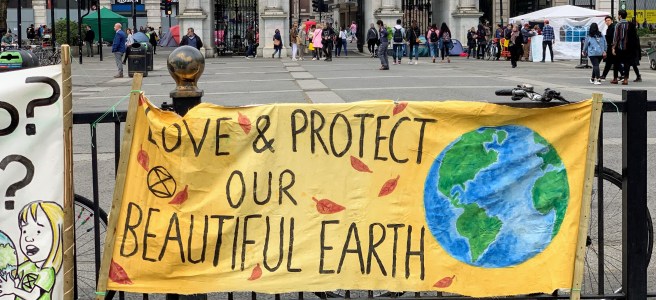
Over the past couple of weeks, thousands of demonstrators have taken to the streets across towns and cities throughout the UK. They call themselves Extinction Rebellion and claim that due to climate change, life on earth as we know it today will cease to exist unless governments act quickly. By causing disruptions to busy roads and staging “die-ins”, their cry out for action has been heard around the world.

They claim that the UK is not doing enough to stem the effect it has on the global rise of temperature and wants the government to commit to zero-net carbon emissions by 2025.
It seems that the government has been listening to these protests as Environment Secretary Michael Gove came out to say that the activist’s “point had been made” while admitting that they had not done nearly enough to combat climate change.
So what is the government currently doing to tackle climate change and is it enough to curb what activists in Extinction Rebellion see as the single biggest threat to all life on earth?
Earlier this year the government published its final estimates of the UK’s greenhouse gas emissions for the period covering 1990 to 2017. They show a clear downward trend in the UK’s emissions of not just carbon dioxide but other greenhouse gases such as methane and nitrous oxide by 42% since 1990. In the report, the Department for Business, Energy and Industrial Strategy found that one of the main reasons for this reduction in emissions was caused by the energy supply sector which saw its overall emissions cut down 7.6% from 2016 to 2017. They attribute this reduction to the sector’s push for more clean energy alternatives and a large decrease in the use of coal power stations.
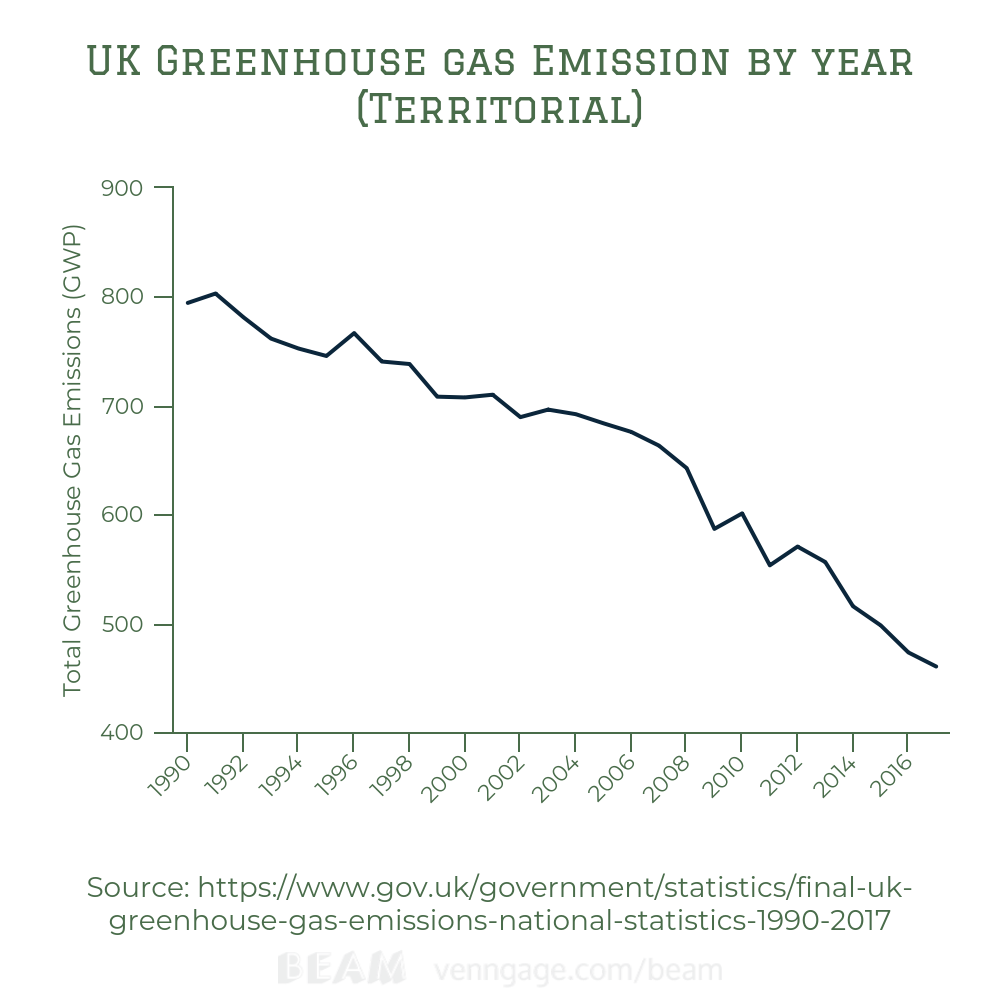
What these figures do not show however are the UK’s non-territorial emissions (i.e., emissions that are not specifically produced in the UK but are consumed here). Non-territorial emissions include things such as air travel, international shipping, and imports. If the figures for non-territorial emissions were to be included alongside that of the territorial emissions found in the report, the reduction in overall emissions would fall from 42% to just 10%.
It is important to note however that non-territorial emissions are hard to pin on one single country due to long supply chains that run across borders. Figures on territorial emissions are useful as they show us what is being directly produced in the UK itself and show us specific sectors that need improving.
Currently enshrined in UK law, successive British governments must ensure that by 2050 carbon emissions fall to a net-zero, 25 years later than when Extinction Rebellion are demanding. At current rates, cutting emissions to net-zero by 2050 is going to be a challenge as the government is on track to miss their long-term targets if they do not act.
However, researchers at the Centre for Alternative Technology released a report in 2017 that suggested ways in which the UK could become a zero-emissions society by 2030. Some of the ideas suggested in the report include severely restricting air travel, a vast transformation of our energy sector with the construction of over 13,000 extra offshore wind turbines, and even collectively changing what we eat as a country. While these suggested changes are certainly possible, they will, however, require great will and determination by successive UK governments if they are to be achieved.
Header Image Credit: John Cameron on Unsplash.com

 Democratic Data